
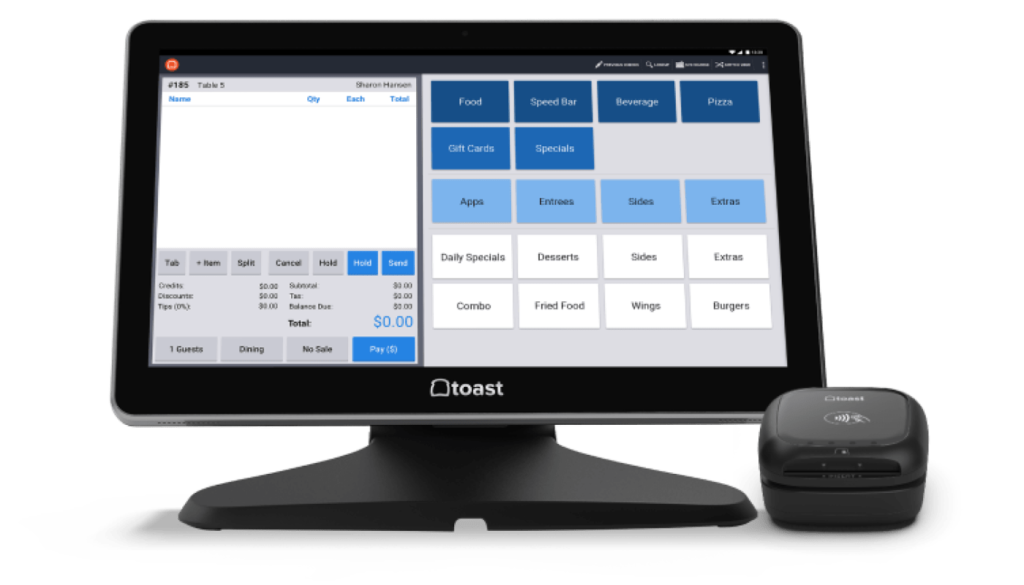
Toast POS is one of the most widely deployed restaurant point of sale systems in the United States, particularly in full service and fast casual environments. It is an all in one, cloud based restaurant operating system built on Android hardware, tightly integrated payments, and a broad ecosystem of add ons that attempt to cover nearly every operational need a restaurant might have.
This article looks at Toast from an operator and technology perspective rather than a sales pitch lens, with an emphasis on tradeoffs, real world considerations, and the kinds of restaurants that benefit most from its design decisions.
What is Toast?
Toast is a vertically integrated restaurant technology platform. The POS software, hardware, payment processing, online ordering, loyalty, payroll, and reporting are all designed to work together under one vendor relationship.
That vertical integration is both Toast’s biggest strength and its biggest risk, depending on how much flexibility a restaurant wants long term.
Pros of Toast
1. Purpose built for restaurants
Toast is not a retail POS adapted for restaurants. The menu logic, modifiers, coursing, kitchen routing, table management, and tipping workflows are all designed around real service environments. This matters a lot in busy kitchens and high volume dining rooms where friction compounds quickly.
2. Strong hardware ecosystem
Toast runs on proprietary Android based hardware that includes:
• Fixed terminals
• Handhelds for tableside ordering and payments
• Kitchen display systems
• Self service kiosks
• Guest facing displays
The hardware is durable, designed for foodservice abuse, and tightly optimized for the software. Restaurants that want a plug and play experience often value this simplicity.
3. Robust online ordering and delivery tools
Toast’s native online ordering integrates directly into the POS, eliminating many of the reconciliation issues that come with third party marketplaces. Menu sync, pricing controls, throttling, and order flow are well executed, especially for restaurants doing significant off premise volume.
4. Solid reporting for operators
Toast provides clean, operator friendly reporting around sales, labor, menu performance, and payments. While not as customizable as some enterprise systems, it is more than sufficient for most single unit and small multi unit operators who want clarity without complexity.
5. Scales well for growing restaurant groups
Toast performs best when a restaurant intends to grow from one location to several. Menu replication, permissions, reporting rollups, and operational consistency are real advantages once a group reaches three to ten locations.
Cons of Toast
1. Closed ecosystem
Toast is not designed to be modular. Restaurants cannot bring their own processor, and integrations outside the Toast ecosystem are limited compared to more open platforms. Once you are in, most core systems live inside Toast.
This is fine for owners who value simplicity, but it can be restrictive for operators who want best of breed tools across different categories.
2. Payment processing lock in
Toast requires restaurants to use Toast Payments. Pricing is often presented attractively upfront, but long term effective rates can be higher than interchange plus arrangements available elsewhere, especially for high volume operators.
Restaurants rarely have true pricing transparency unless they know how to read processing statements carefully.
3. Contract terms
Toast typically uses multi year agreements that bundle software, hardware, and processing together. Early termination fees can be significant, particularly if hardware is subsidized or financing is involved.
This makes Toast a poor fit for restaurants that want flexibility or are unsure about their long term concept viability.
4. Support quality can vary
Toast offers 24/7 support, which is essential in restaurants, but support quality can vary depending on issue complexity and timing. Basic troubleshooting is usually fast, while more nuanced configuration or billing issues may take longer to resolve.
Enterprise level white glove support is not Toast’s strength compared to some higher end platforms.
Pricing and Processing
Toast pricing generally includes:
• Monthly software fees per terminal
• Add on fees for modules like payroll, loyalty, marketing, or online ordering
• Payment processing fees through Toast Payments
• Hardware costs or financing
Processing is typically quoted as a blended rate rather than true interchange plus, although this can vary by deal size and timing. Toast often positions pricing as competitive for small to mid sized restaurants, which is sometimes true initially, but restaurants should evaluate effective rate over time as volume increases.
Hardware is often subsidized upfront, which lowers initial cost but increases contract lock in.
Contracts and Commitments
Most Toast agreements include:
• One to three year terms
• Automatic renewals unless canceled within a defined window
• Early termination fees
• Hardware repayment clauses if canceled early
This structure rewards stability and scale but penalizes experimentation.
Redundancy and Reliability
Toast is cloud based but designed with offline functionality. If internet connectivity is lost:
• Orders can still be taken
• Payments can be stored and processed later
• Kitchen operations continue
However, full reporting, online ordering, and some integrations pause until connectivity is restored. Restaurants in areas with unstable internet should still invest in redundant internet connections regardless of POS choice.
Toast hardware redundancy typically means deploying spare handhelds or terminals rather than relying on software failover.
Who Toast Is For
Toast is a strong fit for:
• Full service restaurants
• Fast casual brands
• Growing restaurant groups
• Operators who want one vendor for most systems
• Owners who value ease of use over customization
Who Toast Is Not For
Toast is not ideal for:
• Restaurants that want processor choice
• Highly cost sensitive operators with large card volume
• Concepts that change frequently or pivot often
• Enterprise brands needing deep customization or open APIs
• Owners who dislike long term contracts
Final Take
Toast is a powerful, well built restaurant operating system that excels when a restaurant commits fully to its ecosystem and plans to grow within it. The tradeoff is reduced flexibility and potentially higher long term costs in exchange for operational simplicity and strong execution.
Restaurants should evaluate Toast not just on features, but on philosophy. Toast works best when a restaurant wants a single throat to choke and is comfortable with that relationship for several years.
-
SkyTab POS Review: A Look in Depth
SkyTab is a cloud based POS platform developed by Shift4. In practice, SkyTab positions itself…
-
Toast POS Review: A Look In Depth
Toast POS is one of the most widely deployed restaurant point of sale systems in…
-
Time to Rethink Menu Pricing: Do You Your Numbers?
In most restaurants, the menu is treated like art. It reflects a chef’s vision, a…


Leave a Reply